
These are some of the brands that have been in existence for over a century, demonstrating remarkable resilience and adaptability through changing markets and consumer preferences. Their long-standing presence is a testament to the quality, trust, and innovation they have consistently delivered over the years. Many of these brands have become iconic symbols in their industries, influencing trends and maintaining loyal customer bases across multiple generations.
FORD
In 1896, Henry Ford built his first car, which he termed a quadricycle, in his Detroit home. A plaque at the entrance to the Michigan Building commemorates the former location of the Ford house. The coal shed in Greenfield Village in adjacent Dearborn has been restored with the same bricks. He founded the Detroit Automobile Company in 1899 as his first foray into automobile manufacturing. The company failed, and in 1901 it was reorganized as the Henry Ford Company. Ford left the company in March 1902 after a dispute with the people who paid for it. He carried his name. Child Harold Wills created the modern Script Ford logo. He used his grandfather's stencil kit. The Ford oval was featured on an automobile 1972 model A. Today, Ford's global footprint demonstrates the company's lasting dedication to quality and sustainability, as it navigates the future with a clear trend toward electrification and advanced technology.
Mercedes-Benz
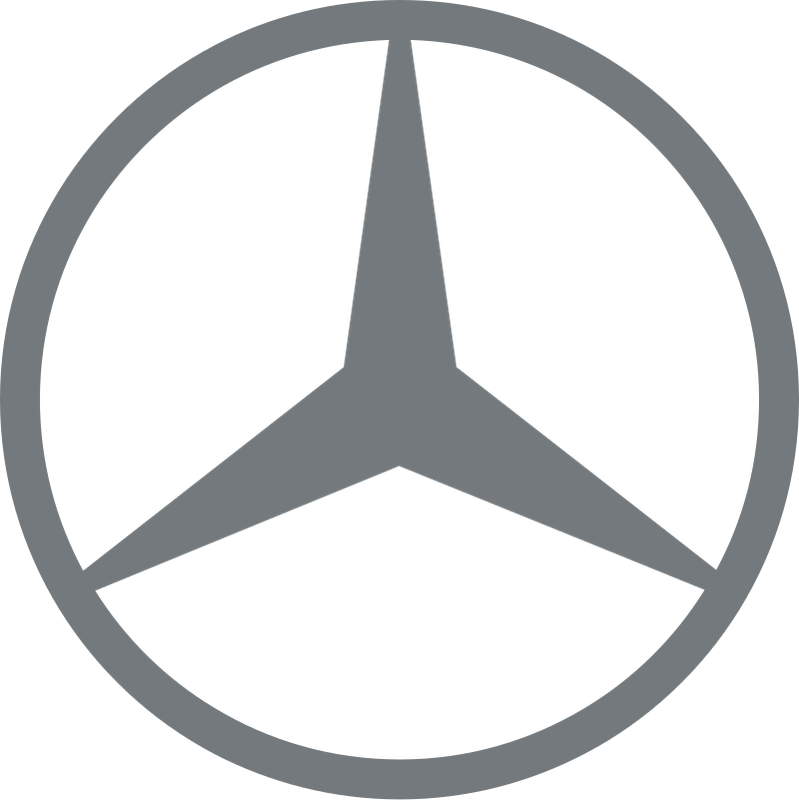
The Mercedes-Benz emblem was initially used to honor its founder, Gottlieb Daimler, and the Daimler family's home nation.
The three points on the Mercedes-Benz star represent the company's ambition of universal motorization, but each point has its own meaning. The points represent land, sea, and air, which the firm imagined they will one day control with Mercedes-Benz engines. The most significant development occurred in 1926, when the two pioneering enterprises, Daimler and Benz, merged. To commemorate the occasion, a Mercedes-Benz three-pointed star was placed inside a circle. This created the brand sign that will become recognized around the world!
Nestle
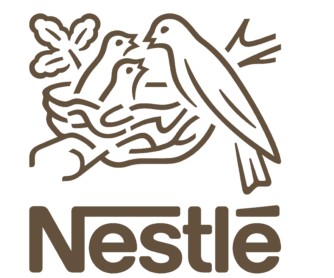
Nestlé's history goes back to the 1860s, when two different Swiss companies were started that would later merge to establish Nestlé. Henri Nestlé and his family helped shape the chocolate industry in Switzerland in the late 1800s and early 1900s. The new logo for Henri Nestlé's corporation is based on his coat of arms. He puts three baby birds in the nest, where their mother is feeding them. This new picture connects his family name to his baby cereal items and keeps other companies from copying his brand. Nestlé now owns over 2,000 brands, which are sold in over 197 countries worldwide. They have a clear goal: to be the leader in health and wellness. To develop a really diverse corporation, the company expanded beyond nutrition to include beauty and wellness categories.
GUINNESS
In 1759, Arthur Guinness opened the St. James's Gate Brewery in Dublin and started making ales. He secured a 9,000-year lease for the disused brewery on December 31, 1759, at £45 each year. Guinness sent his first beer to another country ten years later, on May 19, 1769. In 1778, Arthur Guinness began marketing the dark beer porter. In the 1840s, the earliest Guinness beers to utilize the word "stout" were Single Stout and Double Stout. Originally, "stout" meant how strong a beer was, but over time it came to mean body and color. Guinness is always working on the next phase of ground-breaking research to make the Guinness experience better. They have already released new award-winning technologies like NitroSurge and MicroDraught. The company has gone a long way since Arthur Guinness signed his 9,000-year lease, but it's clear that Arthur's creative spirit is still alive and well.
LOUIS VUITTON
Vuitton started the Louis Vuitton brand in 1854 in Paris. Vuitton made his flat-topped trunks with Trianon canvas in 1858. This made them light and airtight. Before Vuitton's trunks came out, people used rounded-top trunks that couldn't be stacked since they were designed to let water drain off. Vuitton's gray Trianon canvas flat trunk made it easy to stack them on top of each other for travel.
Georges Vuitton started a push to make the company a global enterprise when his father died. In 1893, he showed off the company's products at the Chicago World's Fair. The business made the Monogram canvas its trademark in 1896 and got patents for it all around the world.
Georges Vuitton also made three flower patterns that became the brand's trademarks and are known all over the world. In addition to the emblem with two initials that are entwined, these patterns are also known as the brand's trademarks. The Monogram Flower, the Color Blossom pattern, and the Idylle Blossom are the three.
The famous monogram was only changed a little bit at the end of the 1950s, and only for one reason: to make it easier to use on little parts of collections, like rings on accessories and parts of shoes. The idea and style are still the same. The company emblem is no longer merely a symbol; it now stands for luxury and excellence that can't be beat. It is also a good way to keep a lot of fake things away.
Citation
Wikipedia contributors. (2025, July 1). Ford Motor Company. Wikipedia. https://en.wikipedia.org/wiki/Ford_Motor_Company
Wikipedia contributors. (2001, October 14). Mercedes-Benz. Wikipedia. https://en.wikipedia.org/wiki/Mercedes-Benz
Wikipedia contributors. (2025b, July 10). Nestlé. Wikipedia. https://en.wikipedia.org/wiki/Nestl%C3%A9
Wikipedia contributors. (2025a, June 14). Guinness. Wikipedia. https://en.wikipedia.org/wiki/Guinness
Titov, A. (n.d.). Ford Logo and symbol, meaning, history, PNG, brand. https://1000logos.net/ford-logo/
Luenendonk, M., & Luenendonk, M. (2019, September 20). The History of Nestlé | Cleverism. Cleverism. https://cleverism.com/the-history-of-nestle/
Discover the story of Guinness | Guinness Storehouse. (n.d.). https://www.guinness-storehouse.com/en/discover/story-of-guinness
Titov, A. (n.d.-b). Louis Vuitton Logo and symbol, meaning, history, PNG, brand. https://1000logos.net/louis-vuitton-logo/